PARTNER FACTORY · ALUMINUM EXTRUSION

Aluminum profiles, done properly: extruded, cut, anodized and CNC-finished on one line.

What this line runs day to day, what it is genuinely good at, and the traps I watch for so you don't pay for them.

Straight talk: this is a vetted partner factory I put parts through regularly — not a facility I own. You see the factory's production price with my engineering on top, and I can arrange a plant visit or a video audit any time.

The factory at a glance

What this line actually runs — not a brochure list of everything aluminum.
⚙

Extrusion presses

Presses covering common tonnage ranges, from thin architectural sections to heavier structural bars. Profiles are stretched, straightened and saw-cut to length.

◆

Alloys & tempers

6063-T5/T6, 6061-T6, 6005A and 6082-T6. Billet from certified smelters, material certificates matched to heat numbers.

▣

Surface treatment

Anodizing (natural, black, champagne), powder coating and wood-grain transfer. Machined datums can be masked before anodizing.

✎

CNC finishing

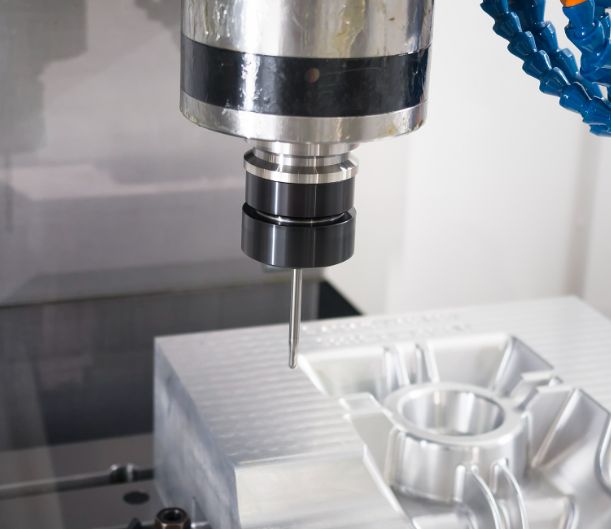
Cut-to-length, milling, drilling and tapping cells turn raw profiles into mounting-ready parts, first articles measured before volume.

From billet to machined profile

One line, six stages. Each stage is a place where quality is either built in or lost.
STAGE 1die & billet

Die & billet

Your cross-section becomes an extrusion die; billet is heated to the range the alloy actually needs, not "hot enough".

STAGE 2press

Extrusion & quench

The profile leaves the die and is quenched at a controlled rate — this step decides whether the temper you paid for is real.

STAGE 3saw

Stretch & cut

Profiles are stretched to kill twist and bow, then saw-cut to length. Long profiles live or die at this stage.

STAGE 4oven

Aging

T5 or T6 aging in ovens, batched and traceable — hardness is sampled, not assumed.

STAGE 5finish

Surface treatment

Anodizing or powder coating, with masking where drawings call out machined datums or conductivity.

STAGE 6CNC

CNC finishing & QC

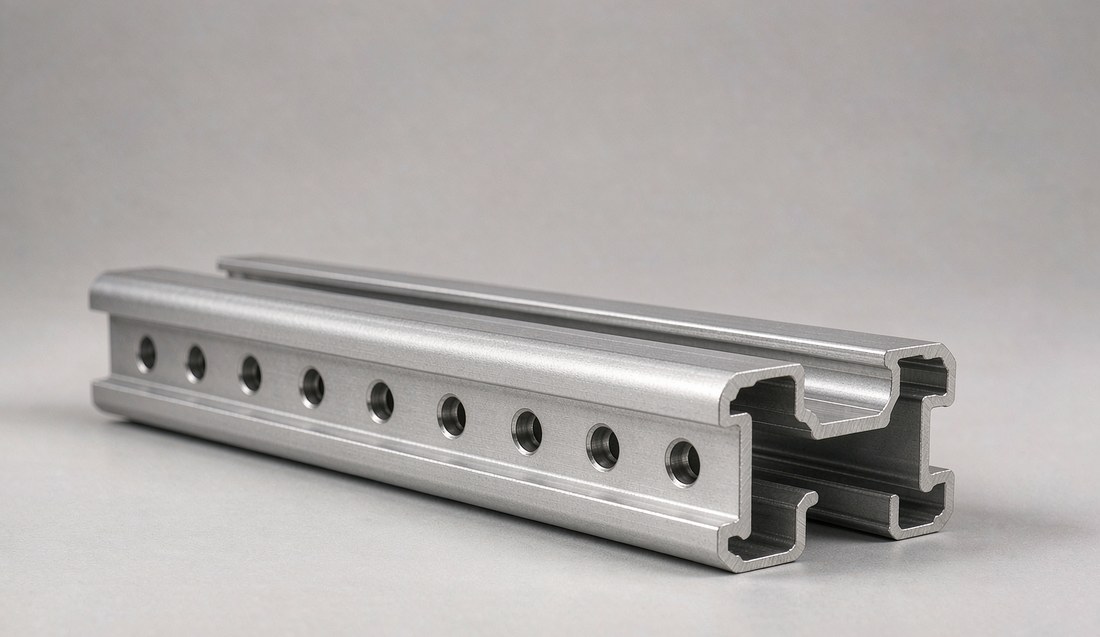
Slots, holes and faces machined; first articles measured and signed off before the batch is packed.

Alloy quick guide

The four alloys that cover almost every profile project I see.
AlloyTypical useTemperMachining note
6063Architectural profiles, enclosures, heat sinksT5 / T6Best surface finish after anodizing; softer, gummier chips
6061Structural brackets, machine frames, fixturesT6Stronger; chips break cleanly; watch distortion on thin walls
6005AThicker structural sectionsT6Good strength where 6063 walls would be too thick to fill
6082European-standard structural workT6Essentially the European answer to 6061

Where extrusion projects go wrong

Four things I check before any profile drawing goes to this factory.

Twist on long profiles

A three-metre profile will twist coming off the press. If your drawing says "straight" without a number, you will argue about it at inspection. Specify straightness and twist per metre, and check it on a flat table with the profile relaxed — never clamped down flat.

Machined datums vs anodizing

The anodic layer grows roughly half into the metal and half out. Holes and slots machined before anodizing come out undersize; datums shift. Decide up front: mask the critical features, or machine them after anodizing. Changing this after first articles is expensive.

Walls too thin for the alloy

Every alloy has a practical minimum wall for a given section size. Push below it and you get die lines, waviness and dimensional scatter instead of savings. The fix is usually a small rib or a slightly thicker wall — cheap on the drawing, priceless in production.

Deep slots & die life

Deep, narrow channels mean a high tongue ratio: the die steel doing the most work is the thinnest. Dies crack, profiles come out with ribs, and lead times slip. A small radius at the slot root and a realistic depth keep both the die and the schedule alive.

Inside the workshop

Floor, machining and finished profiles — the same chain, end to end.
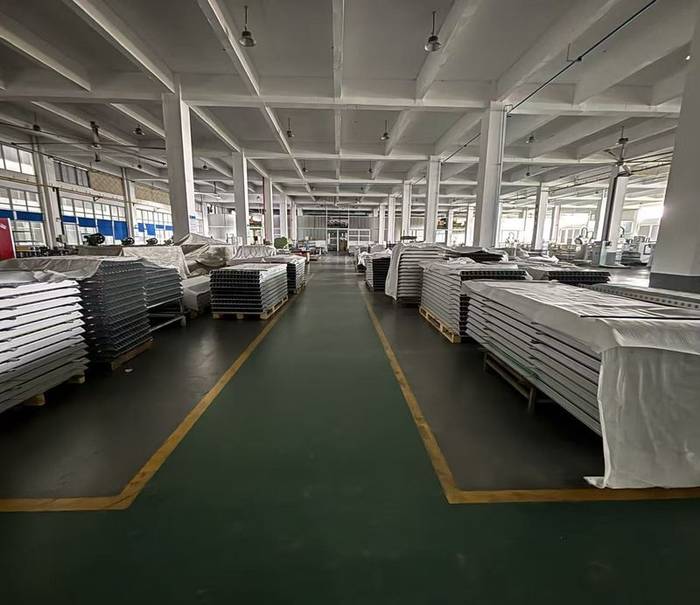
Aluminum extrusion factory floor with production line and profile racks
Factory floor · press line & racks
CNC machining center cutting an aluminum part
CNC finishing · machining center
Close-up of a finished extruded aluminum profile
Extruded profile · machined holes
Quality control on this line: material certificates matched to heat numbers · hardness sampled after aging · dimensional checks per aging batch · surface inspection under inspection light · CNC first articles measured and signed off before volume · profiles packed with PE interleaving so faces arrive unmarked.

Sections we run

Typical profile families. Every section is drawn to your DXF — nothing is picked from a catalogue and forced to fit.
40 30 t 2.0
RECTANGULAR TUBE
Housings, guards, frames. Uniform wall so the die fills evenly and anodizing comes out streak-free.
30 6.4 t 1.5
T-SLOT / FRAMING
Machine guards, workstations, automation frames. Slot geometry is checked against the die drawing before cutting.
40 R 1.5 t 2.0
ANGLE / CORNER
Edge trims, supports, corner joints. Root radius matters: it keeps the die alive and the outside corner clean.
Schematics, not to scale. Sections are drawn from your DXF and checked against the die drawing before a die is cut — wall thickness, corner radii and tongue ratio are reviewed at that stage, not after the first metre comes out wrong.

Common questions

The five things buyers ask about extrusion first.
Do I need to pay for a new extrusion die?

For a new cross-section, yes — one die, one fee, quoted up front. The die stays at the factory and runs your orders only. Standard shapes (angle, tube, T-slot) can often run on existing dies with no tooling cost.

What cut-length tolerance can you hold?

Saw cut-to-length is typically ±0.5 mm on common section sizes. Tighter is possible with finishing saws, but a tolerance tighter than the profile straightness buys you nothing.

Can you machine profiles after anodizing?

Yes — but decide the datum strategy before quoting. The anodic layer builds roughly half into and half out of the surface, so features machined before anodizing come out undersize. Critical features are either masked or machined after anodizing.

What is the minimum order?

There is no artificial minimum. With a shared or standard die, small pilot batches are realistic; with a new die, the die fee sets the practical floor. Either way you see the factory price broken out from the engineering fee.

How is quality checked?

Material certificates matched to heat numbers, hardness sampled after aging, dimensions checked per aging batch, and CNC first articles measured and signed off before volume runs.

Got a profile to make? First drawing review free

Send the cross-section or a sketch — honest assessment of process fit and landed cost within one working day.

Send Your Idea
Send Your Idea →