Flat sheet in,
finished part out.
Cutting, bending, welding, powder coating — one factory.

Work from your drawings. Prototypes, short runs and volume production all welcome. From blanking to powder coat and packing, everything happens in one factory.

0.5–12 mmsheet thickness we cut
up to 3 mbend length
±0.2 mmbending tolerance
60–100 µmpowder film

Inside the shop

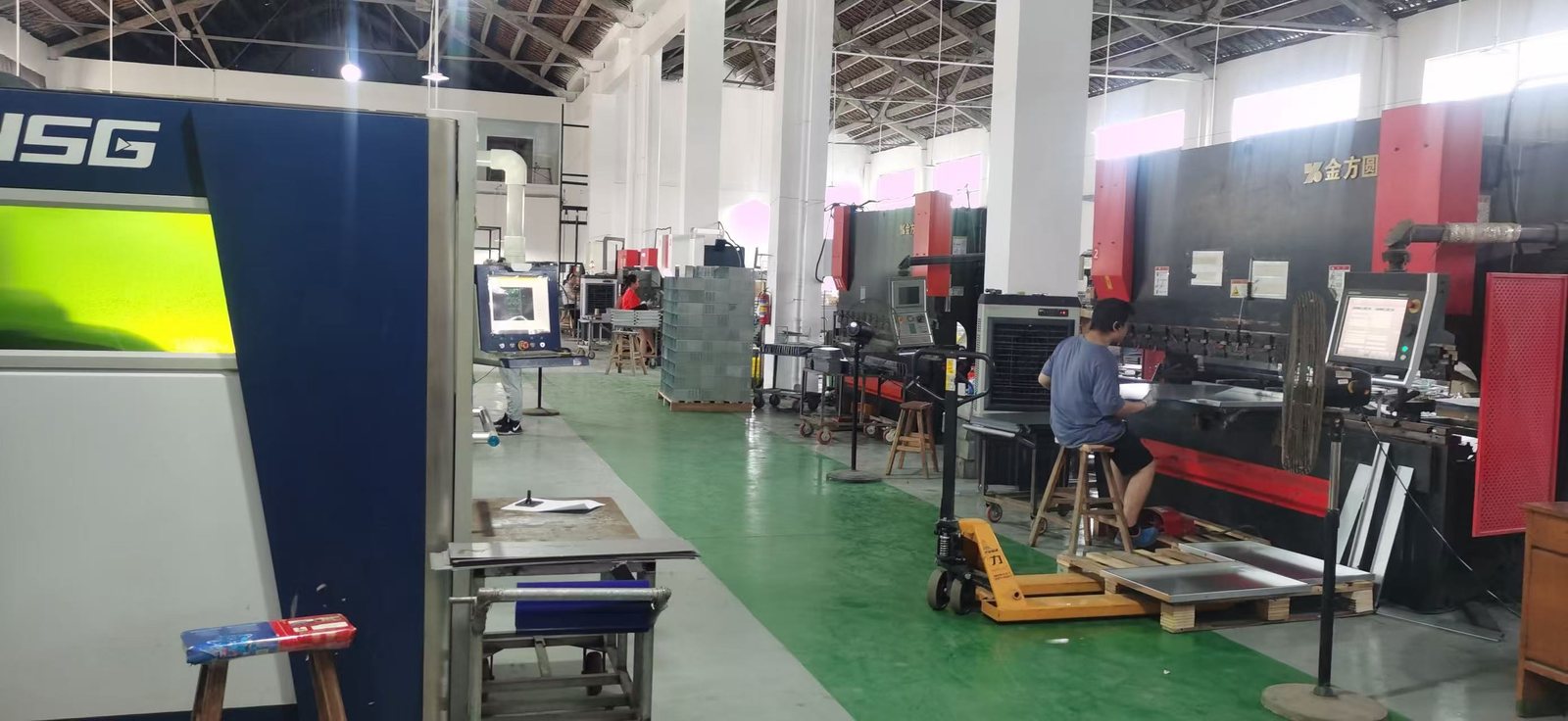
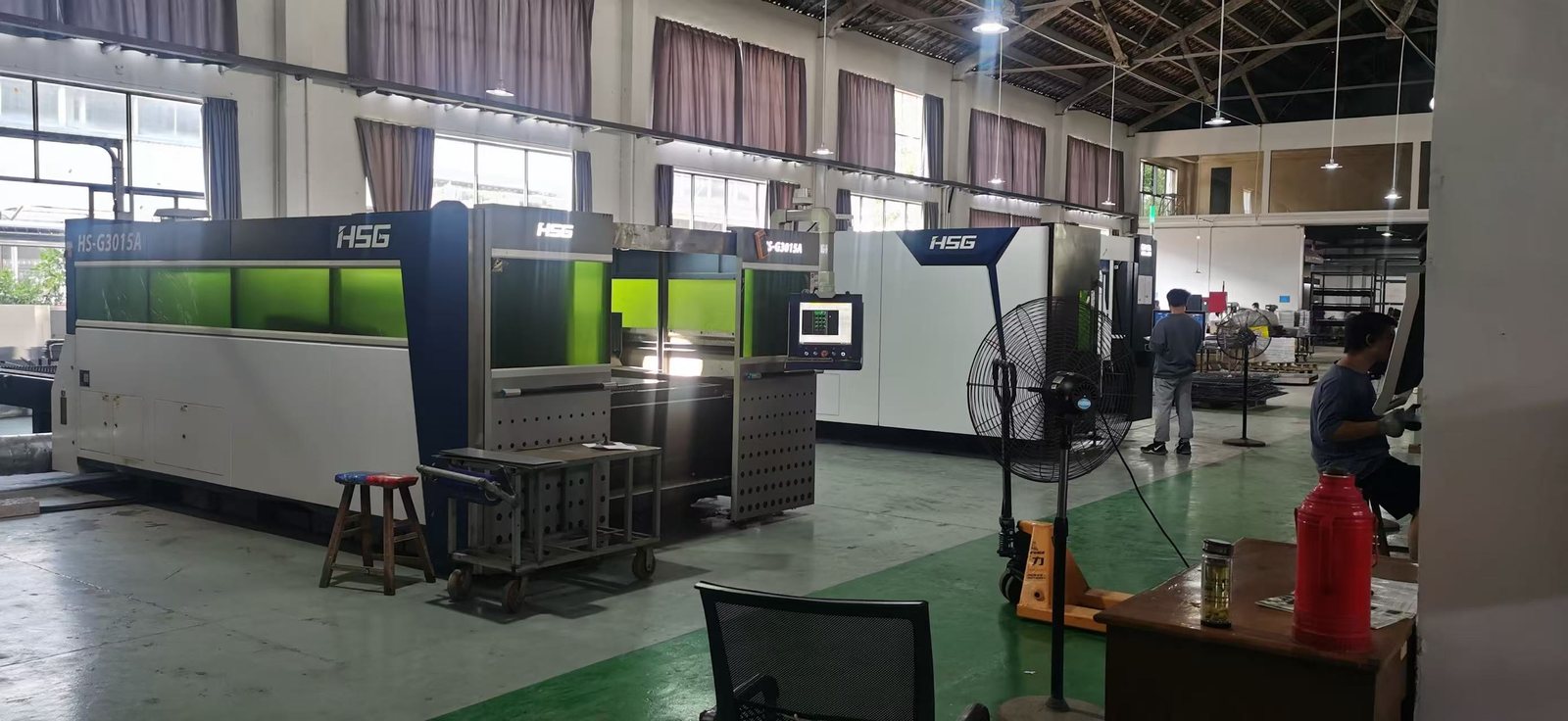
Wide view of the sheet metal shop floor, cutting and forming equipment in one bay
Cutting to bending, one bay
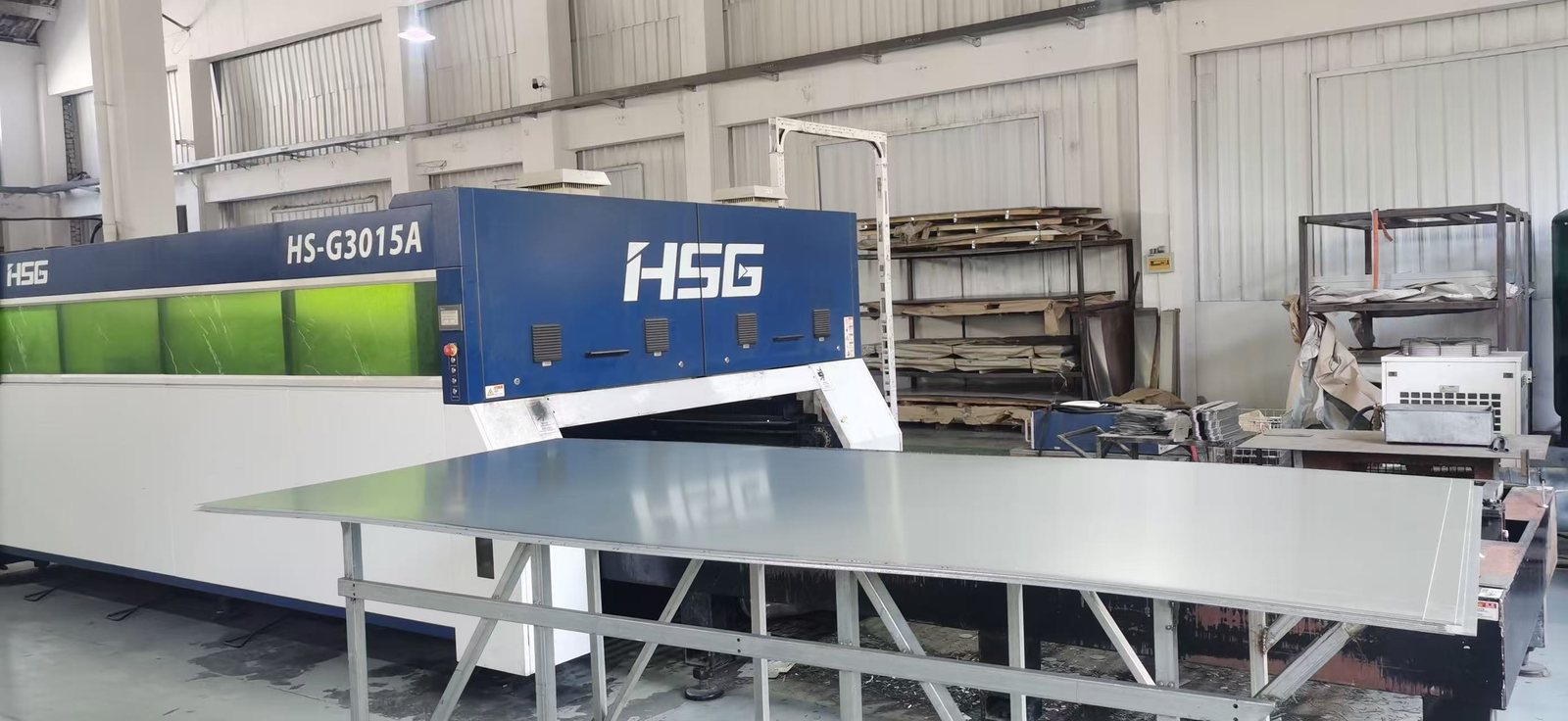
Full sheet steel loaded directly onto the fiber laser cutting bed
Full sheets go straight on the laser bed
Operator bending a sheet metal part at the CNC press brake
3 m press brake — one edge, one hit
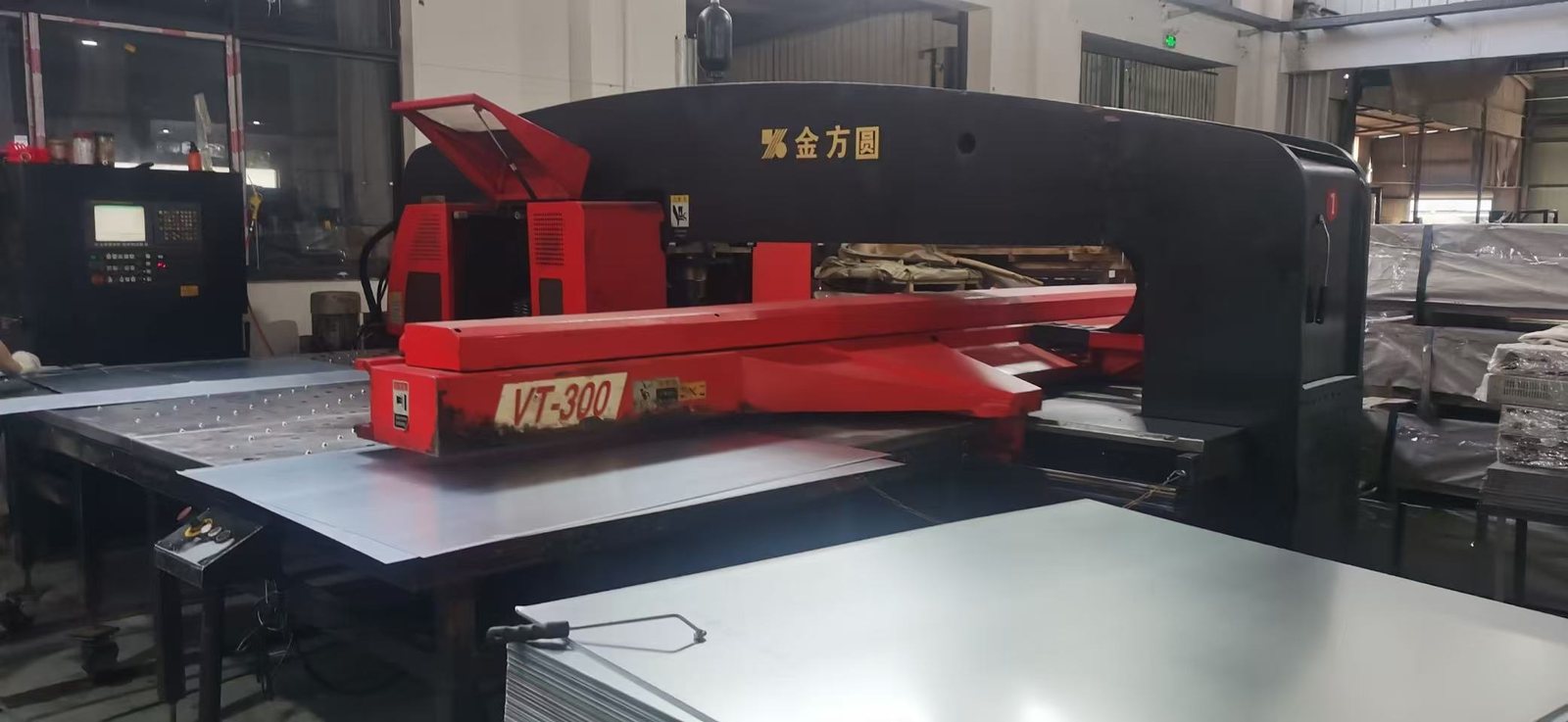
CNC turret punch press with sheet stock on the table
Turret punch — volume parts run here
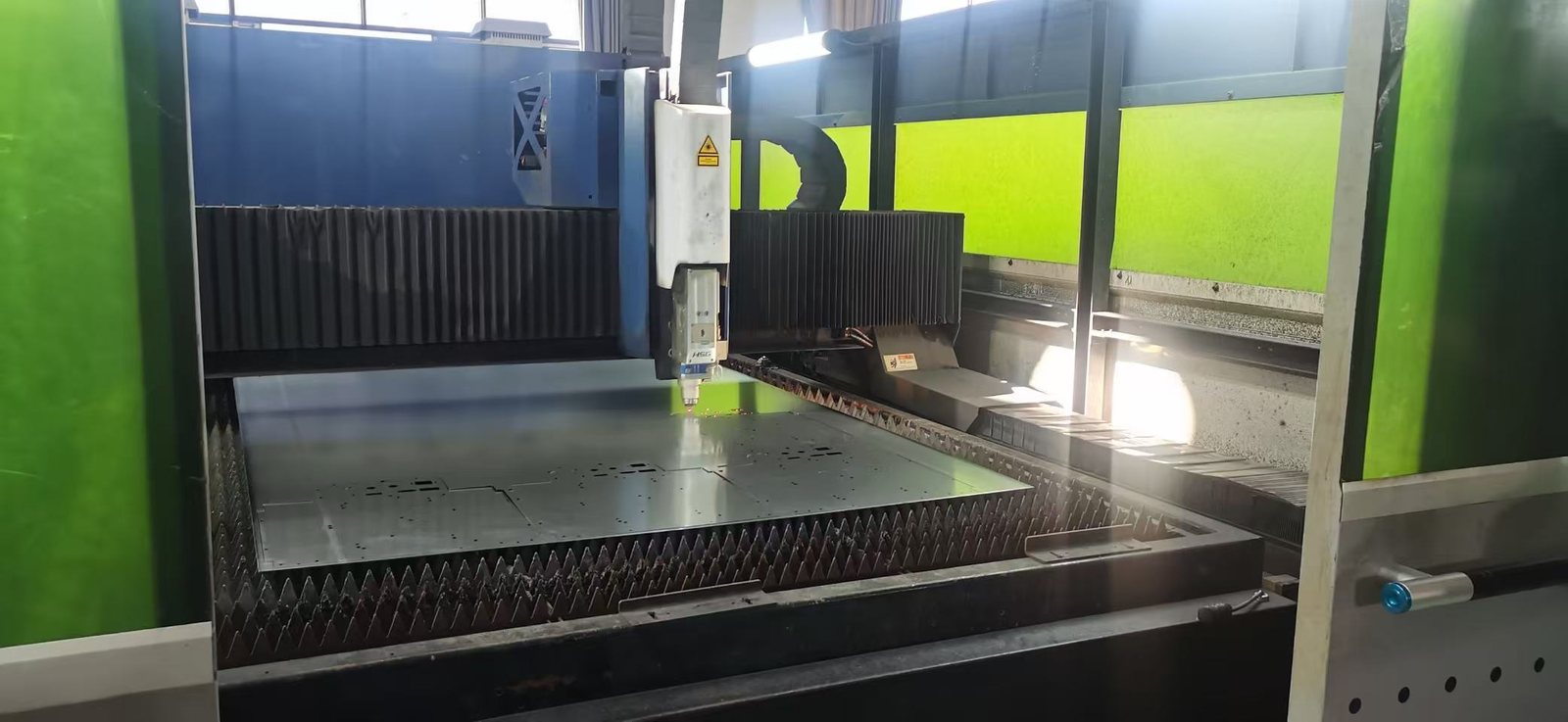
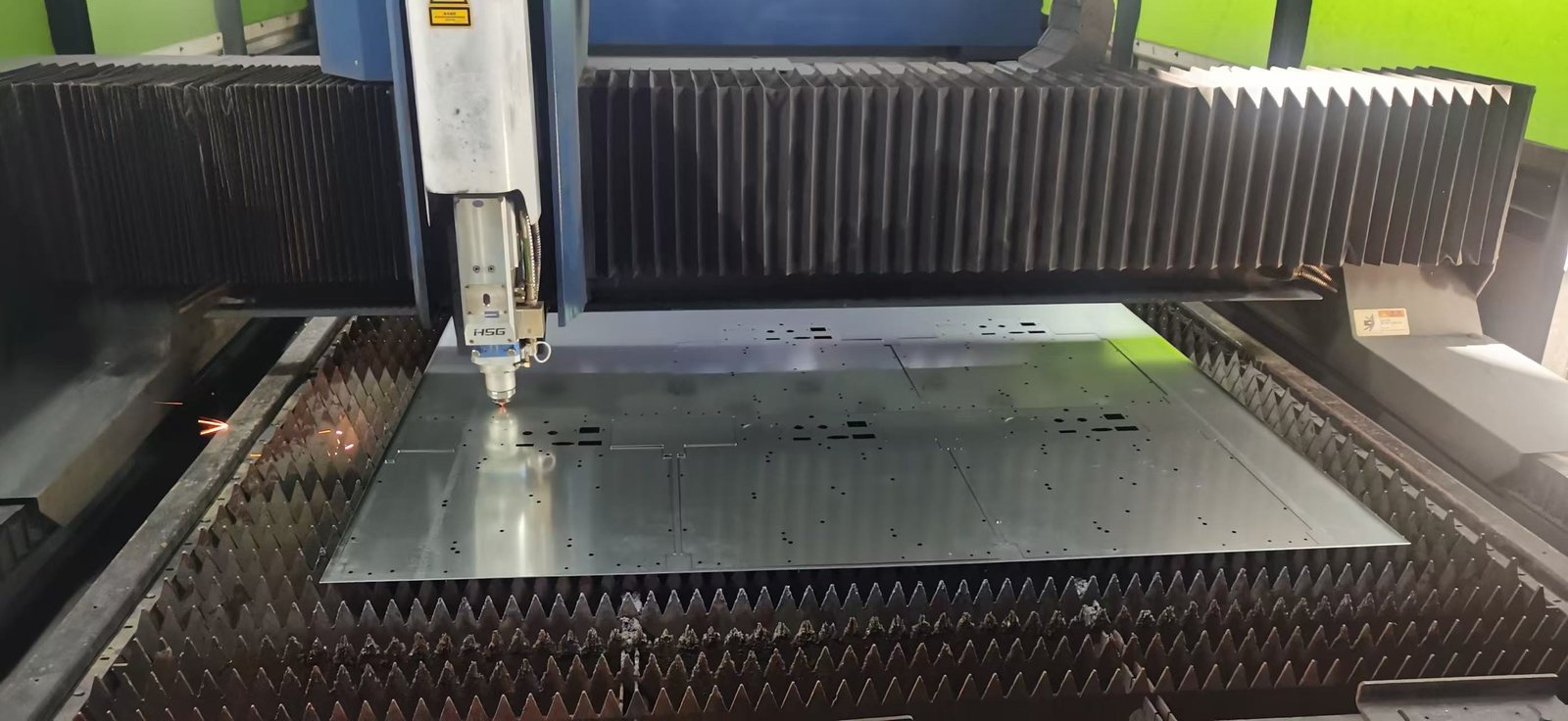
Fiber laser cutting through a nested sheet
Nested sheet, cut in one pass
Close-up of the fiber laser head cutting nested parts
Cut edges and slag checked on the first piece

Real photos from the shop floor. Visit in person or take a video walk-through — just say the word.

What this factory runs

Laser cutting

0.5–12 mm · ±0.1 mm
Carbon steel, stainless, galvanised and aluminium; thick plate goes on the heavy-duty bed. The first piece off the bed gets its edges checked — not discovered halfway through bending.
Drawingwhich material (CRS / HRPO / galvanised / stainless / aluminium), and which face must arrive unmarked

Turret punching

0.5–4 mm · volume parts
Multi-station turret punch. Louvres, countersinks and clinch bosses come out in the same hit as the holes — no second operation.
Drawingwhich holes are functional and which are vent or trim only; above a few hundred pieces, punching beats laser on price

Bending

up to 3 m · ±0.2 mm / ±0.5°
3 m press brake with angle compensation, so a formed flange never blocks the next bend. Angles measured on the first and the last part of every batch.
Drawingwhere to bend, what radius, which face is the visible one (too tight a radius cracks)

Welding

MIG / TIG · spot / stud
MIG on steel, TIG on stainless and aluminium. Welded on fixtures; frames and boxes are squared before they enter the paint booth.
Drawingwhich seams full weld, which stitch only, and whether to grind flush

Powder coating

60–100 µm · RAL matched
Our own powder line — wash, dry, spray and cure in one pass. Parts hang on the line, so both faces get covered.
Drawingwhich faces stay bare (mating faces, earth points, threads); assemble-then-coat or coat-then-assemble

Assembly

rivets / clinch / hinges / bushings
Rivet nuts, clinch fasteners, hinges and bushings fitted to your list, kitted and packed so the box goes straight onto your assembly line.
Drawingwhich joints must stay serviceable, how the box should be packed
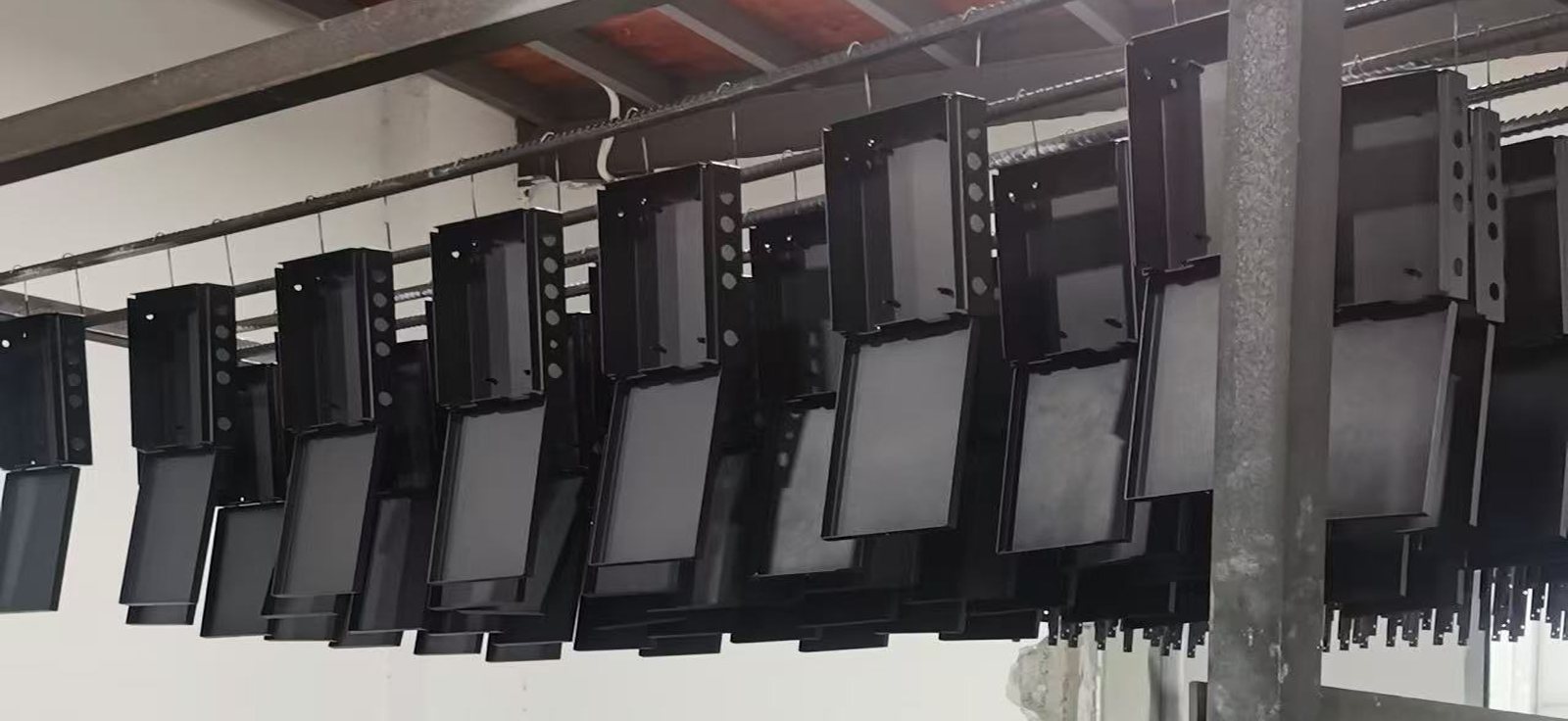
Powder-coated black sheet metal parts hanging on the paint line, awaiting inspection POWDER LINE · ON THE LINE, PRE-INSPECTION

Checked before it ships

  • Mill certificate checked first — grade, thickness and coating match the drawing before the first sheet is cut.
  • First article measured and signed off — a dimension off means the program is fixed on the spot; the run doesn't start.
  • Bend angles checked on first and last part — a batch doesn't drift from start to finish.
  • Frames measured across the diagonals after welding — square is what decides whether it goes together.
  • Film thickness and adhesion sampled every batch — smooth and textured finishes to the same standard.
  • Visible faces inspected under light — interleaved packing in export crates; a scuffed part isn't shipping damage, it's ours.

Inspection records travel with the box — any issue traces back to its batch.

Where sheet metal goes wrong

The CAD flat pattern doesn't match the machine

CAD bends with the software's default K-factor; the shop bends with what its machines actually do — a few hundredths of a millimetre per hole, and the enclosure won't close at assembly. Send the bend parameters with the drawing, or let the shop check the flat pattern before cutting.

Thin panels bow after welding, and powder won't hide it

One continuous bead around a box pulls the panel to one side, no matter how much powder goes on top. The fix is boring: a fixture, short stitches, alternating sides — and a folded seam instead of a weld wherever the design allows.

After coating, the parts won't go together

Two faces at 80 µm each add about 0.3 mm to a joint. Bolts stop seating, clinch fasteners bind — and it gets blamed on machining. Which faces get masked, and clearances sized for coated thickness — both decided before cutting starts.

Two panels, and the customer sees two colours

Brushed finish is directional. Adjacent parts from different sheets read as different colours under the customer's lighting. Rolling direction, protective film, which face stays hidden — one line on the drawing beats an argument after delivery.

Next door: the aluminium extrusion line →

Laser cut or turret punch — which is cheaper?

Under a few dozen parts, laser: no tooling, fast setup, any geometry. In the hundreds and up, when the work is mostly holes and forms, the turret punch wins on piece price — louvres, countersinks and clinch bosses come out in the same hit as the holes. Volume in the overlap band gets quoted both ways, and the cheaper one wins.

What tolerance can a bent part hold?

±0.2 mm on formed features and ±0.5° on angles, batch after batch. Tighter than ±0.1 mm across a bend means a dedicated checking fixture — the money goes there, and the machine is not the limit. Where the datum sits matters more than the number on the drawing.

What is the minimum order?

None — a single prototype is fine. What grows with volume is the setup charge: programming, brake setup, and a colour change on the powder line. Quotes show the factory price and the service fee on separate lines, so you can see both.

Got sheet metal to build? Free quote from your drawing

A drawing, a sample, or a sketch with dimensions — whatever you have. Within one working day: can it be made, how long it takes, roughly what it costs.

Send Your Idea
Send Your Idea →