"Aluminum" is one word for a whole family of alloys. ADC12 — the workhorse die-casting alloy — and 6061/6063 — the two workhorse extrusion alloys — sit in different branches of that family. They begin as different raw materials, are shaped by different processes, and behave differently the moment they become a finished part. When you specify a metal component, the choice between them decides your geometry, your finish, your tooling and your unit cost.
The short answer
ADC12 is an Al–Si–Cu die-casting alloy, supplied as ingots. It is melted and injected into a steel mold, so it can take complex three-dimensional shapes at high volume — but it is brittle, essentially cannot be welded, and will not anodize cleanly. 6061 and 6063 are wrought Al–Mg–Si alloys, supplied as round billets. They are pushed through a die into a constant cross-section, then cut, machined and anodized — 6061 when you need strength, 6063 when you need surface finish and complex hollow profiles.
Two aluminum families — and two very different starting materials
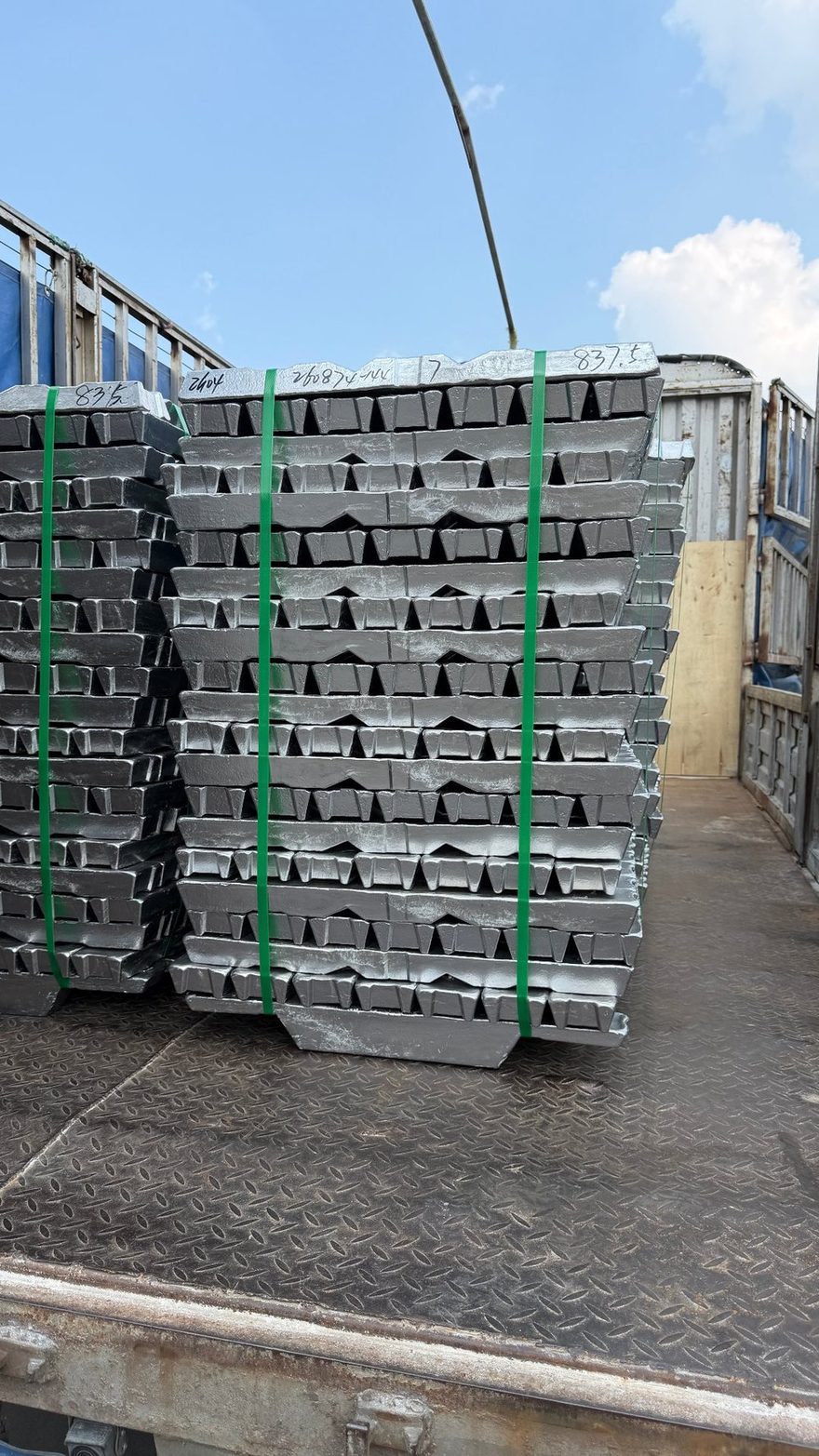
The cleanest way to see the difference is to look at what arrives at the factory gate. The die-caster takes delivery of ingots; the extruder takes delivery of billets. Both are cast metal, but they are cast for opposite purposes.
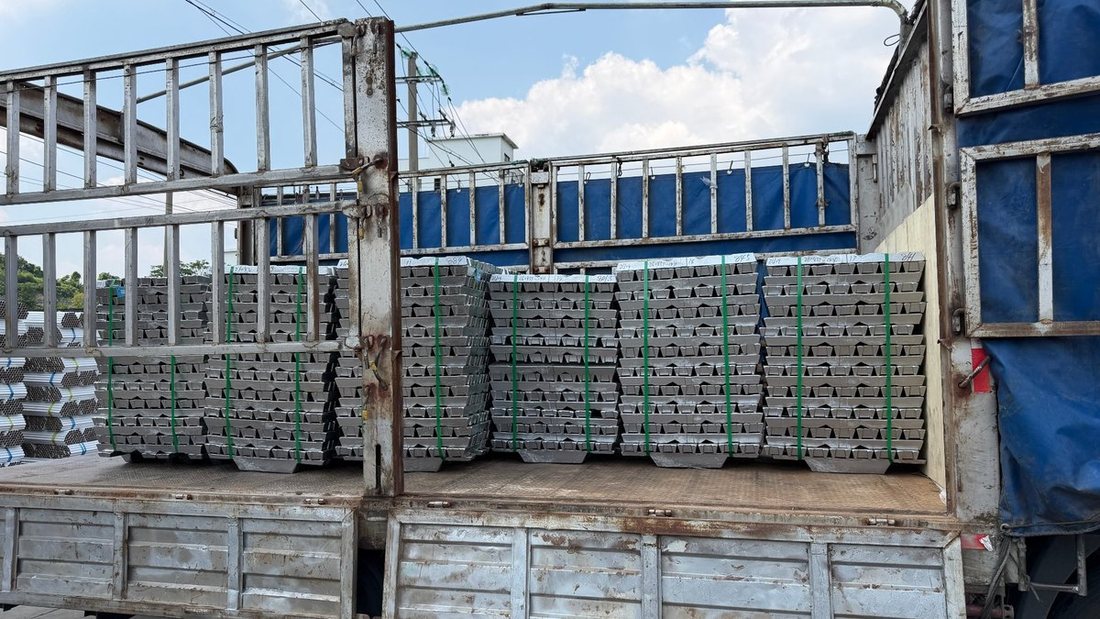
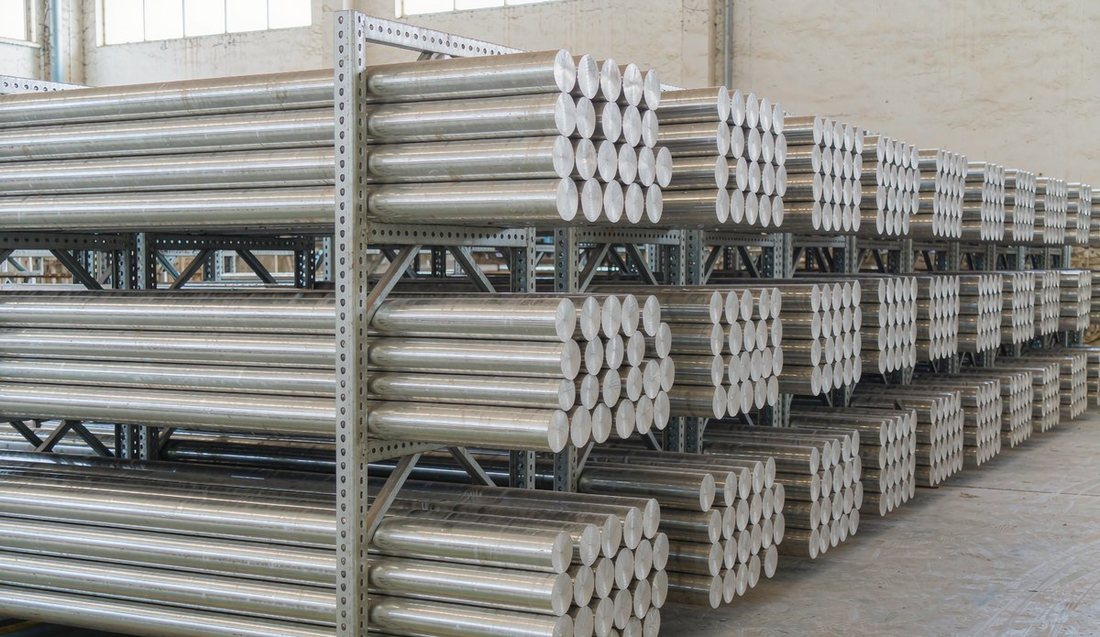
Ingot (often called 铝锭) is a small, notched bar — typically a few kilos each — designed to be re-melted. Its whole job is to be easy to stack, weigh and drop into a furnace. Billet (铝棒) is a long round log, commonly 3–9 inches in diameter and 3–6 m long. It is not re-melted: it is heated to its working temperature and then forced through the extrusion die, which is why the alloy must be malleable rather than free-flowing.
Why the chemistry differs
The alloy recipes are built around how the metal has to behave during forming, not around a single "best" aluminum.
- ADC12 is silicon-heavy — roughly 9.6–12% silicon, with 1.5–3.5% copper. That silicon content makes the molten metal thin and fast-flowing, so it fills thin walls and fine detail in a mold before it freezes. Copper adds strength. The trade-off is a hard, brittle structure once solid.
- 6061 is magnesium-silicon with a little copper — around 0.8–1.2% Mg and 0.4–0.8% Si. It is heat-treatable: aging to the T6 temper turns it into a genuinely strong structural alloy.
- 6063 is magnesium-silicon without the copper — around 0.45–0.9% Mg and 0.2–0.6% Si. Lower alloying means lower strength, but the best extrudability and the cleanest surface, which is exactly why architectural profiles and anodized trim are almost always 6063.
| ADC12 (die casting) | 6061-T6 (extrusion) | 6063-T5 (extrusion) | |
|---|---|---|---|
| Family | Cast / die-casting alloy | Wrought alloy | Wrought alloy |
| Base chemistry | Al–Si–Cu (~11% Si) | Al–Mg–Si + Cu | Al–Mg–Si |
| Raw material | Ingot (re-melted) | Billet (extruded) | Billet (extruded) |
| Heat treatment | Used as-cast | T6 | T5 / T6 |
| Tensile strength | ~260–310 MPa | ~310 MPa | ~150–190 MPa |
| Elongation | ~1–3% (brittle) | ~8–12% | ~8–12% |
| Hardness | ~HB 74–100 | ~HB 95 | ~HB 60–73 |
| Weldability | Not weldable | Good (4043 / 5356) | Good |
| Anodizing | Poor — dark, mottled | Good | Excellent |
| Typical parts | Housings, brackets, covers, LED bodies | Structural parts, machined parts | Frames, rails, heatsinks, trim |
How each is formed — and what that locks in
The forming process is not a detail you choose after the design; it dictates the design. Die casting and extrusion produce fundamentally different kinds of shape.
| Die casting (ADC12) | Extrusion (6061 / 6063) | |
|---|---|---|
| Process | Molten metal injected into a steel mold under high pressure | Heated billet pushed through a steel die |
| Shape freedom | Complex 3D — bosses, ribs, walls, integrated features | Constant cross-section only; features added by machining |
| Tooling | A mold (die) — expensive, weeks to make | An extrusion die — far cheaper, days to make |
| Economics | Tooling amortised over high volume | Cost scales with kilos; low tooling risk |
| Wall thickness | Thin walls possible (~1 mm and up) | Set by the profile; very uniform |
| Tolerance & surface | Draft and parting lines required; more variation | Tight, consistent tolerance; clean finish |
The four traps that cost buyers money
These are the ones that surface after the part is designed and the tooling is cut, when they are expensive to fix.
- Welding. ADC12 is essentially not weldable — its porosity and silicon content make a sound weld practically impossible, so an assembly that needs welding cannot use a die-cast body. 6061 and 6063 weld well with the right filler (4043 / 5356), though the heat-affected zone loses some of its temper.
- Anodizing. This is the biggest one. Die-cast ADC12 anodizes poorly — the silicon and copper produce a dark, patchy, mottled finish that rarely matches a specification. If the part must have a clean, uniform anodized surface, it should be extruded 6063 or 6061, not cast.
- Porosity and pressure-tightness. High-pressure die casting traps gas, so castings can leak. A part that must hold fluid or pressure often needs impregnation or a redesign — plan for it, rather than discovering it at leak-test.
- Tolerances and flatness. Extrusion holds tight, consistent tolerances along the profile. Castings need draft and flash and vary more; if a dimension is critical, it will usually be machined after casting, which adds a step and a cost.
So which one should the part be?
- Complex 3D shape, high volume, no welding, painted finish → ADC12 die casting.
- Long constant cross-section (frame, rail, heatsink, trim) → 6063 or 6061 extrusion.
- Clean anodized finish → extrusion, not die casting.
- Must be welded → wrought alloy (6061 / 6063), not ADC12.
- Needs toughness or impact resistance → 6061-T6, whose elongation is far higher than a casting.
- Low volume or a prototype → machine from stock or extrusion; do not commit to a casting mold yet.
- Must be pressure-tight → question die casting early, and design for impregnation or machining if you stay with it.
Because the tooling economics are so different — a mold versus an extrusion die — volume is often the deciding factor, not the drawing. Below a certain quantity, the sensible answer is frequently "extrude or machine it and skip the tooling entirely."
Where I fit in
I sit between you and both shops — the die-casting plant and the extrusion mill — so the choice is made on the real numbers: geometry, volume, finish, tolerance and landed cost. That often means telling a customer their part should be extruded when they assumed it would be cast, or the reverse, before anyone commits to tooling. See how the engagement runs:
Read: die casting in China — tooling, porosity and when to cast →
Read: aluminum extrusion in China — dies, profiles and secondary ops →
See the four capability domains →
Send a drawing — I'll tell you whether it should be cast or extruded →